
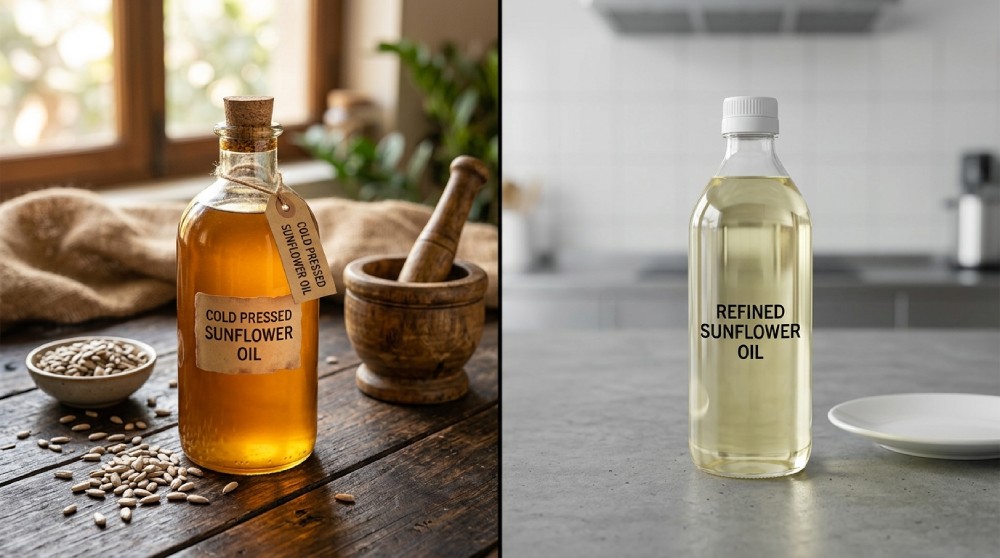
Key Takeaways (At a Glance)
- Extraction Method: Cold pressed oil is mechanically crushed below 45C without chemicals. Refined oil uses industrial hexane solvents and heat up to 200C.
- Nutrient Retention: Cold pressing preserves 100% natural Vitamin E, antioxidants, and authentic seed aroma. Refining strips natural nutrients and deodorizes the oil.
- Zero Trans Fats: Pure cold pressed oils contain 0% chemical residues and zero thermally induced trans fats.
- Cooking Efficiency: Because of natural density and bold aroma, cold pressed oils require lower volume per meal than light refined oils.
For decades, commercial cooking oils were sold on the promise of being clear, odorless, and non-stick. However, more health-conscious households across India are pausing to ask a crucial question: What process turns raw oilseeds into these crystal-clear, odorless liquids?
The answer lies in industrial oil refining-a process involving intense thermal processing, chemical solvents, and synthetic bleaching agents.
In contrast, traditional pure cold pressed oil relies on simple mechanical pressure to yield nutrient-rich oil just as nature intended. Learn all about the full nutritional profile in our guide to cold pressed oil health benefits.
In this comprehensive guide, we examine the cold pressed vs refined oil difference, explain step-by-step how cold pressed oil is made, and help you choose the right oil for your home.
1. How Cold Pressed Oil Is Made (Step-by-Step Extraction)
Understanding how cold pressed oil is made reveals why it retains such high nutritional value compared to factory-refined alternatives.
Step 1: Seed Selection and Sun Drying
High-quality oilseeds-whether bold peanuts, sun-dried coconut copra, or traditional Rajasthan mustard seeds-are thoroughly cleaned to remove dust and stones. They are then naturally sun-dried to reduce moisture.
Step 2: Slow Mechanical Crushing (Kachi Ghani)
The seeds are placed in a traditional wooden or heavy mortar press (Kachi Ghani or Kolhu). A heavy pestle rotates slowly at low RPM (revolutions per minute).
- No External Heat Added: The slow mechanical crushing avoids thermal degradation.
- Strict Temperature Control: Friction temperature is kept strictly below 45C, preserving heat-sensitive vitamins and antioxidants.
Step 3: Natural Sedimentation and Filtering
Once extracted, the raw oil is allowed to settle naturally in food-grade stainless steel vats for 24 to 48 hours. Heavy seed particles settle at the bottom. The clear upper oil is poured through unbleached cotton cloth filters-completely avoiding chemical clarifying agents or bleaching clays.
2. How Refined Oil Is Processed (Industrial Extraction)
To contrast, commercial refining extracts up to 98% of oil from seeds using chemical and thermal processing:
- Solvent Extraction (Hexane): Seeds are soaked in chemical solvents like petroleum-derived hexane to wash out remaining oil.
- Degumming and Neutralization: Phospholipids are removed using caustic soda (sodium hydroxide) and phosphoric acid.
- Bleaching: The oil is passed through fuller’s earth or bleaching clay at high temperatures to strip all natural color.
- Deodorization: Heated to 180C-220C under vacuum to remove natural odors and flavors.
This extreme heat and chemical treatment strips the oil of its natural Vitamin E, antioxidants, and authentic taste while potentially generating harmful trans fatty acids.
3. Direct Comparison: Cold Pressed vs. Refined Oil
| Feature | Cold Pressed Oil (Kachi Ghani) | Refined Cooking Oil |
|---|---|---|
| Extraction Method | Mechanical pressing at low temperature (less than 45C) | Chemical solvent extraction (Hexane) + high heat |
| Chemical Exposure | 100% Chemical-Free | Caustic soda, phosphoric acid, hexane, bleaching agents |
| Nutritional Content | High in natural Vitamin E, MUFA, PUFA, and Antioxidants | Micro-nutrients stripped during refining |
| Aroma and Flavor | Rich, authentic seed flavor and natural aroma | Odorless, neutral, bland |
| Cooking Quantity | Requires less volume due to density and rich aroma | Higher consumption volume needed |
| Trans Fats | Zero Trans Fats | Potential thermal trans-fat formation during deodorization |
4. Understanding Organic Cold Pressed Oil Price
A common question buyers ask when looking to pure cold pressed oil buy online is: Why is organic cold pressed oil priced higher than commercial refined oil?
The price difference comes down to three main factors:
- Yield Difference: Mechanical cold pressing yields only 35% to 45% oil from seeds. Chemical solvent extraction extracts 95%+, sacrificing quality for sheer quantity.
- Quality of Seeds: Cold pressing requires fresh, whole, undamaged seeds because any defect affects flavor directly. Refined oils can process lower-grade seeds because bleaching and deodorizing strip all taste and color anyway.
- Purity and Time: Cold pressing is slow and artisanal. You pay for genuine nutritional value rather than mass-produced chemical yield.
5. Which Cold Pressed Oil Should You Choose for Your Kitchen?
Every cooking oil brings unique culinary and nutritional qualities to your meals:
– For Daily Indian Cooking and Frying: Groundnut Oil
Groundnut oil has a balanced fat profile and high thermal stability. It enhances the taste of everyday dishes without overpowering them.
Buy Cold Pressed Groundnut Oil
– For North Indian Curries, Tadka and Pickles: Mustard Oil
Extracted from premium mustard seeds, Kachi Ghani mustard oil adds an iconic aromatic punch while offering natural antibacterial and warming benefits. Check out our in-depth cold pressed mustard oil cooking guide for smoke point comparisons and purity tests.
Buy Cold Pressed Black Mustard Oil (Kachi Ghani)
Buy Cold Pressed Yellow Mustard Oil (Kachi Ghani)
– For South Indian Cooking, Baking and Skin Care: Coconut Oil
Packed with healthy MCTs and lauric acid, cold pressed coconut oil provides exceptional flavor and multi-purpose wellness benefits. For details on culinary uses and skincare routines, see our dedicated wood pressed coconut oil guide.
Conclusion: Make the Pure Switch Today
Your daily cooking oil forms the foundation of every meal served to your family. Moving away from chemically processed refined oils to 100% natural, traditionally extracted cold pressed oils is one of the simplest and most impactful health decisions you can make.
At Dadi Ka Khajana, based in Sri Ganganagar, Rajasthan, we press our oils in small batches from selected seeds-ensuring unrefined purity, rich natural aroma, and zero chemical additives in every drop.
Explore All Pure Cold Pressed Oils at Dadi Ka Khajana
Frequently Asked Questions (FAQ)
Q1. Is cold pressed oil good for deep frying?
Yes. Cold pressed oils with high smoke points, such as mustard oil (about 250C) and groundnut oil (about 230C), remain stable at frying temperatures and are safe for traditional Indian deep frying.
Q2. Does cold pressed oil have a strong smell?
Yes, cold pressed oils retain the authentic, natural aroma of the raw seed (pungent in mustard, nutty in peanut, sweet in coconut). Unlike chemically deodorized refined oils, this natural aroma indicates purity and unrefined freshness.
Q3. How long can I store cold pressed oil?
Because cold pressed oils contain no chemical preservatives, store them in a cool, dark place with tightly sealed caps. For optimal flavor and freshness, use within 6 to 9 months of extraction.