
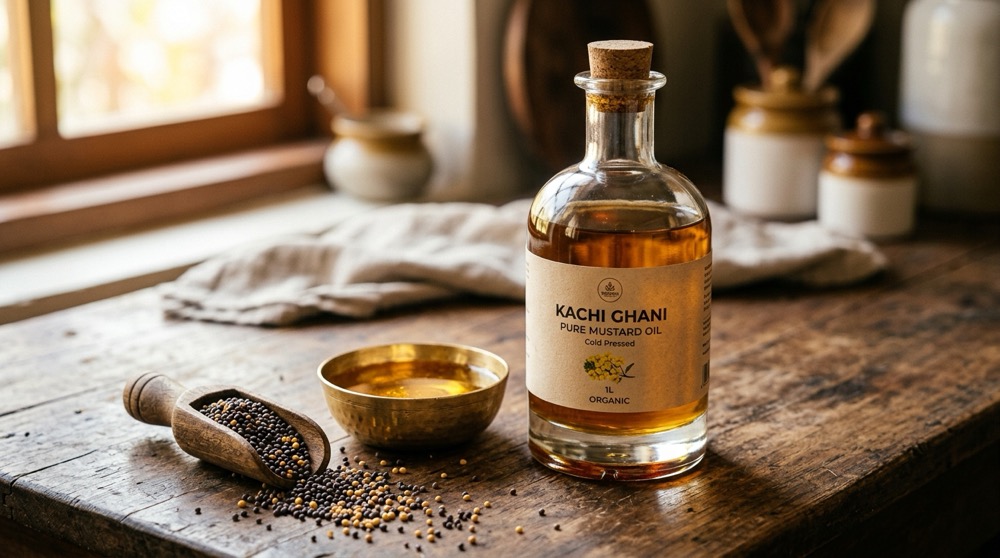
Quick Answer / Executive Summary: Cold pressed mustard oil (kachi ghani) is an unrefined, heart-healthy cooking oil extracted mechanically below 45°C. With a high smoke point of approximately 250°C (480°F), an optimal 1:1.2 Omega-3 to Omega-6 ratio, and zero chemical solvents, it is ideal for high-heat Indian cooking, daily tadkas, and traditional Ayurvedic wellness. Yellow mustard oil offers a milder, sweeter flavor, while black mustard provides the authentic sharp pungency.
📌 Key Takeaways
- Smoke Point Advantage: With a smoke point of ~250°C, pure cold pressed mustard oil easily outperforms refined oils and olive oil for high-heat cooking, deep frying, and tadka.
- Heart-Healthy Profile: Packed with MUFA, natural Omega-3 (ALA), and zero trans fats, supporting balanced cardiovascular wellness.
- Pungency Choice: Choose traditional Black Mustard Oil for intense, authentic pungency and pickling; choose Yellow Mustard Oil for mild, sweet, and daily gourmet versatility.
- Authenticity Matters: Look for verified mechanical cold pressing and single-origin seed transparency to avoid solvent-extracted blends.
1. What Makes True Cold Pressed (Kachi Ghani) Mustard Oil Different?
For centuries across Northern and Eastern India, traditional cooking centered on oil pressed slowly in wooden or stone expellers known as kolhus or ghanis. In mass commercial production, however, modern edible oils undergo extreme thermal processing exceeding 200°C and solvent extraction using chemical hexane (see our detailed guide on cold pressed vs refined oil). This industrial refining bleaches out natural carotenoids, deodorizes distinctive aromas, and strips heat-sensitive antioxidants like tocopherols.
In stark contrast, authentic cold pressed extraction relies solely on mechanical pressure without synthetic solvents or external heat application:
- Thermal Control: Oilseed temperature is strictly verified to stay under 45°C throughout pressing, preserving delicate bioactive compounds.
- Unrefined Integrity: The expelled oil undergoes physical sedimentation and micro-cloth filtration rather than chemical neutralization, degumming, or bleaching.
- Natural Volatile Allyl Isothiocyanate (AITC): This compound provides the distinct pungent aroma characteristic of raw black mustard oil and acts as a natural antimicrobial barrier.
When you purchase cold pressed mustard oil online, verifying single-origin seed sourcing and traditional wooden-press methods ensures you obtain unadulterated edible grade oil.
2. Is Cold Pressed Mustard Oil Good for Cooking?
A persistent question among home cooks and culinary professionals is whether unrefined mustard oil can safely handle daily high-heat cooking and deep frying.
The Science of Smoke Point & Thermal Stability
Cooking fats break down when heated beyond their thermal tolerance, producing acrolein, free fatty acids, and toxic lipid peroxides. Cold pressed mustard oil exhibits remarkable thermal resilience:
- Smoke Point: Pure kachi ghani mustard oil has a smoke point between 245°C and 250°C (475°F – 482°F), significantly higher than extra virgin olive oil (~190°C) and raw coconut oil (~175°C).
- Fatty Acid Profile: Composed predominantly of monounsaturated fatty acids (MUFA oleic and erucic fractions) and polyunsaturated fatty acids (PUFA linolenic components), mustard oil maintains oxidative stability under sustained skillet frying, stir frying, and deep frying.
- Traditional Smoking Technique: In traditional Rajasthani and Bengali cooking, chefs heat the oil until it reaches a gentle wispy smoke stage, then allow it to cool slightly before tempering. This step tempers the raw volatility of allyl isothiocyanate, mellowing the aroma into a rich, nutty savory undertone.
| Oil Type | Extraction Method | Smoke Point (°C) | Dominant Fatty Acid | Best Culinary Application |
|---|---|---|---|---|
| Cold Pressed Black Mustard | Wooden Ghani / Expeller | ~250°C | MUFA (Oleic & Erucic) | High-heat tadka, deep frying, pickles |
| Pure Yellow Mustard Oil | Cold Pressed Expeller | ~245°C | MUFA (Oleic / Gadoleic) | Gourmet curries, fish fry, mild gravies |
| Refined Sunflower Oil | Chemical Solvent Extraction | ~230°C | PUFA (Linoleic) | Neutral baking, processed snacks |
| Extra Virgin Olive Oil | Cold Centrifuge | ~190°C | MUFA (Oleic) | Raw salad dressing, low-heat pasta |
3. Black Mustard Oil vs Yellow Mustard Oil: Which Should You Choose?
Many consumers are familiar only with dark, pungent black mustard oil. However, pure yellow mustard oil cold pressed has emerged as a premium culinary favorite for households seeking health benefits without intense pungency.
Black Mustard Oil (Brassica nigra / Brassica juncea)
- Color & Texture: Deep golden-amber with rich viscosity.
- Flavor Profile: Intense, sharp pungency that clears the sinuses, classic pungent bite.
- Best Used For: Preserving traditional Indian pickles (achaar), authentic sarson ka saag, mutton curries, machher jhol, and external joint massage.
Yellow Mustard Oil (Sinapis alba / Brassica alba)
- Color & Texture: Clear, bright sunny yellow with light mouthfeel.
- Flavor Profile: Subtle, sweet, delicate nutty finish without aggressive pungency.
- Best Used For: Daily vegetable stir-fries, children’s meals, salads, light dal preparations, and recipes where you want the nutritional advantages of cold-pressed oil without overpowering subtle spices.
4. Evidence-Based Health Benefits of Cold Pressed Mustard Oil
Modern biochemical analysis verifies centuries of traditional Ayurvedic wisdom regarding cold pressed mustard oil (for a broader look at how unrefined oils protect cellular vitality, see our guide on cold pressed oil health benefits):
A. Cardiovascular Lipid Support
The American Heart Association and Indian Council of Medical Research (ICMR) recommend maintaining a dietary ratio of Omega-6 to Omega-3 fatty acids close to 5:1 or lower. While typical refined seed oils (such as corn and soybean) exhibit skewed ratios exceeding 20:1, cold pressed mustard oil boasts a naturally balanced ratio of approximately 1.2:1. Its high monounsaturated fat concentration helps manage LDL cholesterol while maintaining HDL levels.
B. Natural Antimicrobial & Glucosinolate Shield
Cold pressed mustard oil contains glucosinolates, which hydrolyze into allyl isothiocyanate during crushing. Scientific food safety tests demonstrate that this compound actively inhibits common foodborne bacterial pathogens including E. coli and Salmonella, making it the premier natural preservative for traditional Indian pickling.
C. Joint & Muscular Relief
Rich in alpha-linolenic acid (ALA), an essential anti-inflammatory Omega-3 fatty acid, warmed cold pressed mustard oil combined with garlic or camphor is traditionally applied topically to ease joint stiffness, improve micro-circulation, and relieve seasonal winter aches.
5. How to Identify 100% Pure Kachi Ghani Mustard Oil (The At-Home Purity Test)
Adulteration of edible oils with cheap palm olein or argemone oil remains a concern in unorganized markets. Here are three verified tests to check quality at home:
- The Refrigerator Freezing Test: Pour 50ml of mustard oil into a glass jar and place it in the freezer for two hours. Pure mustard oil remains completely liquid. If palm oil or paraffin wax is blended in, white cloudy solid layers will separate at the bottom.
- The Natural Sedimentation & Color Check: Pure cold pressed oil has natural micro-particulate clarity and a warm amber-golden sheen. Artificially colored oils appear fluorescent or artificially yellow.
- The Aroma & Eye Test: Raw kachi ghani black mustard oil releases a natural pungent vapor that produces a slight prickle in the nasal passage and eyes upon heating, without chemical harshness.
6. Sourcing Authentic Mustard Oil from Sri Ganganagar
The quality of cold pressed mustard oil depends directly on the agricultural quality of the seed harvest. The fertile canal-irrigated plains of Sri Ganganagar in Northern Rajasthan produce India’s most prized high-oil-content mustard seeds.
At Dadi Ka Khajana, local smallholder farmers cultivate non-GMO mustard seeds under natural sunshine. The seeds are double-cleaned to eliminate grit and pressed at ambient room temperatures using authentic expellers. The resulting oil is bottled unrefined in food-grade packaging with batch testing, ensuring zero synthetic additives, zero argemone contamination, and full nutritional potency.