
Allergy Advisory & Disclaimer: Groundnut oil is derived from peanuts (Arachis hypogaea). Persons diagnosed with peanut allergies should exercise caution. This article is educational and does not constitute medical advice.
Quick Answer / Executive Summary: Wood pressed groundnut oil (cold pressed peanut oil) is an unrefined, thermally stable cooking oil extracted mechanically below 45°C. With a high smoke point of approximately 225°C (437°F), rich concentrations of heart-healthy monounsaturated fats (oleic acid), and zero chemical additives, it is widely regarded as an ideal healthy cooking oil in India. It preserves natural peanut aroma while preventing the formation of harmful trans fats during deep frying of festive sweets and daily meal preparations.
Why Traditional Wood Pressed Groundnut Oil Is Returning to Indian Kitchens
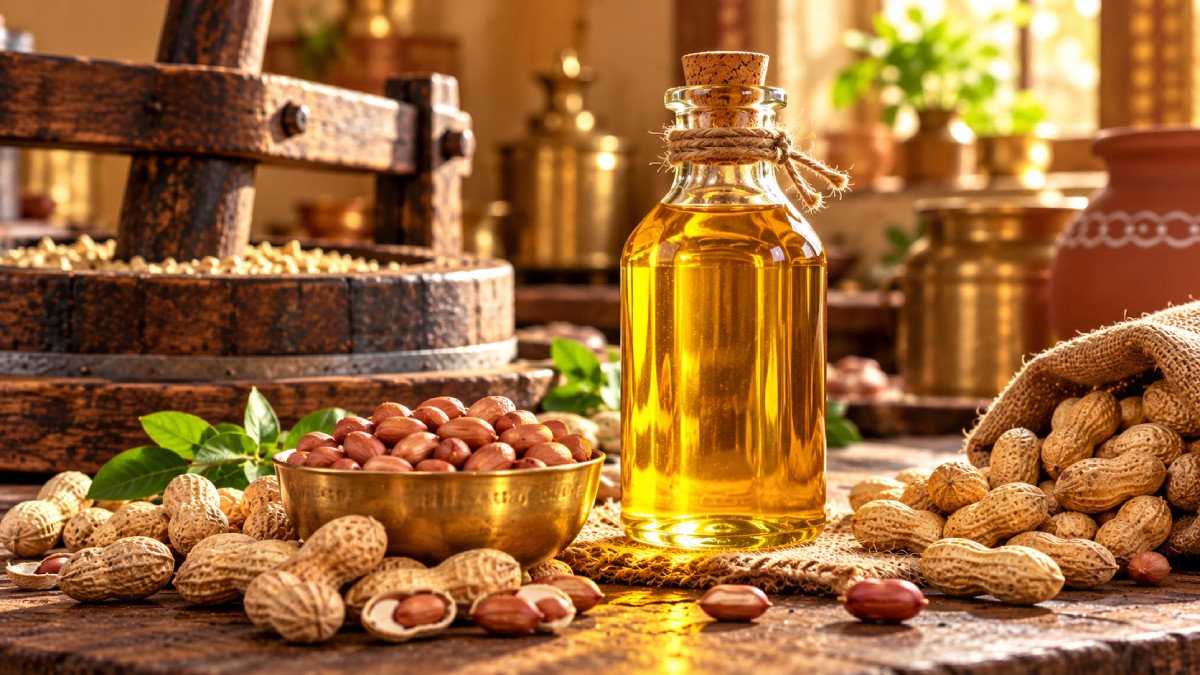
For generations, Indian households across Gujarat, Maharashtra, Rajasthan, and Andhra Pradesh relied on groundnut oil (moongphali ka tel) as their primary culinary fat. Traditional oil extraction used heavy wooden expellers (chekku or kolhu) that crushed sundried peanut kernels at slow speeds.
The mid-twentieth century brought mass-market industrial solvent extraction. To maximize industrial yield, commercial manufacturers began using chemical petroleum solvents (hexane), phosphoric acid degumming, and high-heat deodorization reaching temperatures above 200°C. While this produced a clear, neutral liquid with prolonged supermarket shelf life, it stripped peanuts of natural vitamin E, phytosterols, and natural aromas.
Authentic wood pressed groundnut oil for cooking revives traditional processing principles:
- Low-Temperature Mechanical Friction: Temperatures remain strictly under 45°C during the pressing cycle, protecting natural fatty acid bonds and antioxidants.
- Physical Sedimentation: Instead of chemical bleaching earths, the raw oil rests in food-grade settling tanks and passes through fine cotton fabric filters.
- Natural Resveratrol and Vitamin E: Mechanical extraction preserves natural polyphenols and tocopherols that protect oil molecules against heat degradation.
Cold Pressed Peanut Oil Smoke Point: Can You Deep Fry With It?
A common misconception among health-conscious cooks is that all unrefined cold pressed oils break down easily under high cooking temperatures. While this holds true for delicate oils like flaxseed or extra virgin olive oil, cold pressed groundnut oil is fundamentally different.
The Thermal Science of Groundnut Oil
The smoke point of pure cold pressed peanut oil is approximately 225°C (437°F).
When oils heat past their thermal threshold, triglyceride molecules break down into free glycerol and fatty acids, releasing toxic acrolein and lipid peroxides. Groundnut oil possesses exceptional thermal stability because:
- High Monounsaturated Fat Content: Composed predominantly of stable oleic acid (MUFA), groundnut oil resists oxidative breakdown under prolonged heat far better than high-polyunsaturated seed oils.
- Minimal Free Fatty Acids: Fresh, undamaged peanuts extracted without moisture excess maintain low baseline acidity, directly supporting high thermal endurance.
- No Foaming or Darkening: High quality wood pressed oil does not foam excessively or leave sticky polymer residues on cookware during medium and high-heat cooking.
Groundnut Oil for Deep Frying Diwali Sweets and Festive Savories
During festive seasons across India (Diwali, Karwa Chauth, Makar Sankranti), Indian kitchens operate deep fryers and kadhais for hours at a time, preparing traditional delicacies:
- Festive Sweets: Besan ladoos, gujiyas, gulab jamuns, and shakarpara require clean frying fats that do not mask the aroma of cardamom, saffron, or roasted gram flour.
- Crispy Savories (Farsan / Namkeen): Chaklis, mathris, samosas, and banana chips achieve superior crispness when fried in pure groundnut oil because the oil does not soak heavily into the dough.
Why Groundnut Oil Outperforms Refined Vegetable Oils During Festivals:
Commercial refined oils contain polyunsaturated vegetable blends that form sticky polar compounds when reheated. Wood pressed groundnut oil:
- Resists Rancidity: Natural vitamin E (tocopherols) acts as an inherent heat stabilizer.
- Prevents Trans Fat Formation: Because it undergoes no industrial chemical hydrogenation, it remains free from artificial trans-fatty acids.
- Enhances Flavor Naturally: Its pleasant, mild nutty undertone complements Indian spices and flours rather than producing an artificial oily aftertaste.
Health and Nutritional Profile of Unrefined Peanut Oil
Choosing authentic cold pressed groundnut oil directly benefits long-term family metabolic health.
Cardiovascular Health and Oleic Acid
Wood pressed groundnut oil is abundant in oleic acid, a heart-healthy monounsaturated fat that helps maintain healthy blood lipid profiles by supporting HDL cholesterol while managing LDL oxidation.
Natural Resveratrol and Phytosterols
Peanut skins and germ contain resveratrol, a potent polyphenol noted for supporting vascular elasticity and cardiovascular wellness. Cold pressed extraction preserves these micronutrients, which are largely destroyed during industrial chemical refining.
Zero Cholesterol and Natural Vitamin E
Like all unrefined plant oils, pure groundnut oil contains zero dietary cholesterol. Its natural alpha-tocopherol (vitamin E) content provides dietary protection for skin cell membranes and counters free-radical oxidation throughout the body.
Refined Peanut Oil vs Wood Pressed Groundnut Oil: Comparison
| Attribute | Industrial Refined Peanut Oil | Wood Pressed Groundnut Oil |
|---|---|---|
| Extraction Method | Chemical Hexane Solvent Extraction | Slow Mechanical Wooden Ghani |
| Processing Temperature | Exceeds 200°C (392°F) | Maintained below 45°C (113°F) |
| Chemical Additives | Bleaching clays, caustic soda, synthetic antioxidants | Zero chemicals, single-origin whole peanuts |
| Natural Aroma & Flavor | Completely stripped, flat, odorless | Rich, natural, roasted peanut fragrance |
| Antioxidant Content | Minimal (lost during thermal deodorization) | High natural vitamin E and resveratrol |
| Best Culinary Use | Industrial fast food | Healthy home cooking, curries, festive frying |
Everyday Culinary Uses in the Indian Kitchen
Beyond festive frying, wood pressed groundnut oil is one of the most versatile healthy cooking oils in India. Its balanced flavor profile makes it suitable for diverse regional cooking styles:
Everyday Sabzis and Curries
From dry potato roasts (aloo sabzi) to rich tomato gravies, groundnut oil binds whole spices without overwhelming the palate.
Morning Breakfast Tempering
Adding a teaspoon of wood pressed groundnut oil to morning poha, upma, or dhokla tempering provides rich aroma and sustained dietary satiety.
Traditional Chutneys and Podis
Roasting dry chilies, garlic, and lentils in peanut oil produces authentic taste in South Indian coconut and peanut chutneys.
How to Store Wood Pressed Groundnut Oil for Maximum Shelf Life
Because authentic cold pressed oils contain no synthetic preservatives (such as TBHQ or BHT), proper kitchen storage ensures freshness:
- Keep Away from Direct Heat: Store the oil tin or bottle in a dark, cool pantry shelf rather than directly next to the stovetop burner.
- Use Air-Tight Containers: Oxygen exposure accelerates lipid oxidation. Ensure container caps are sealed tightly after daily use.
- Avoid Moisture Entry: Always pour with clean, dry spoons or spouts to prevent moisture-induced fungal growth or microbial degradation.
- Natural Shelf Life: Stored properly, high quality wood pressed groundnut oil retains peak aroma and nutritional stability for 9 to 12 months.
Frequently Asked Questions (FAQ)
Can I reuse wood pressed groundnut oil after deep frying?
Yes, provided the oil was not heated to excessive smoke and food debris is strained immediately through a fine sieve after cooling. Store strained oil in a sealed container and use it for daily tempering or shallow frying within a few days.
Does cold pressed groundnut oil have a strong peanut smell?
It possesses a gentle, pleasant nutty aroma that enhances savory cooking. Unlike mustard oil, it has zero pungency and does not irritate the eyes or throat during heating.
Is groundnut oil suitable for weight management diets?
Monounsaturated fats promote satiety and healthy metabolic hormone production. When consumed in moderation as part of balanced whole-food meals, it provides clean dietary fuel without empty calories.
Summary & Key Takeaways
- Wood pressed groundnut oil combines traditional mechanical purity with high thermal resistance (~225°C smoke point).
- It is one of the safest and most delicious choices for festive deep frying (Diwali snacks and sweets), resisting thermal breakdown.
- Abundant monounsaturated oleic acid and natural vitamin E support long-term cardiovascular health.
- Sourcing authentic, lab-tested oils from traditional Rajasthani producers like Dadi Ka Khajana ensures your family enjoys pure, chemical-free edible oil every single day.
🥜 Authentic Wooden Ghani Groundnut Oil: Cold pressed from single-origin whole peanut kernels at under 45°C. High 225°C smoke point for trans-fat-free festive deep frying and daily curries.
👉 Shop Pure Wood Pressed Groundnut Oil from Dadi Ka Khajana — 100% natural, unadulterated & lab-certified.